
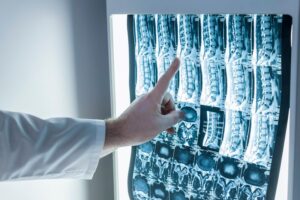
When you are dealing with severe or chronic pain, you want lasting relief! In order to achieve that, you need to do more than manage symptoms. You should understand what is causing the pain so your medical team can treat the problem at its source. Unfortunately, even with advanced imaging equipment, finding the cause of discomfort is not always easy or simple. Indeed, your symptoms might not match what shows up on your MRI or X-ray! Why does that happen, and what might your care team do in such a situation? This blog post provides useful information.
Why the Disconnect?
The human body is incredibly complex, and although the medical community has extensive knowledge of different bodily systems, diagnostics is still a challenging and often inaccurate science.
For example, studies often show that participants have musculoskeletal problems like bulging or degenerated discs — and yet they do not report any pain! Other participants are dealing with ongoing discomfort, but nothing on their MRI or X-ray images seems to fit their symptoms.
This disconnect may be due to the fact that imaging equipment gives data only about certain issues. For example, X-rays are great for looking at bones, whereas MRIs are more useful for soft tissues. Plus, MRIs only capture static images; they do not provide information about tissues when they are in motion. They also cannot identify things like muscle imbalances, stress, or other factors that might contribute to pain.
What Can You Do?
It can be frustrating not to have an explanation for your pain, but do not give up hope! One thing you can do is visit a non-surgical orthopedic doctor with experience in regenerative medicine. Often, these doctors use diagnostic ultrasound, which can capture images that show your body in motion; this might provide a diagnosis that static imaging missed.
Plus, orthopedic doctors see many patients with a broad range of injuries and musculoskeletal conditions, including rotator cuff tears, meniscus tears, labrum tears, and more. Their extensive experience might prompt them to try treatments and therapies that a primary care doctor might not suggest. For example, regenerative medicine options, such as stem cell injections or PRP therapy, seek to enhance your body’s natural healing ability, which can reduce pain and improve function.
Limitations of modern imaging equipment might slow down your journey to relief, but do not give up! There are very few conditions that cannot be effectively managed by a qualified doctor.
Meet the Practice
Dr. Paul Tortland, DO, is a board-certified specialist in Regenerative Medicine and Sports Medicine. Under his direction, our team offers a range of therapies that help to manage pain and address the cause of symptoms. For example, Dr. Tortland is a leader in the field of stem cell therapy. We also use musculoskeletal ultrasound for diagnostic purposes. To learn more about us and how we may be able to serve you, contact our Glastonbury office at 860-430-2821.